

By strategically building, segmenting, and activating your own first-party data strategy, you can create a defensible marketing advantage, dramatically improve your AI campaign performance, and build a resilient brand for the cookieless future. Companies that master this transition will become tomorrow’s market leaders.
For years, digital marketing has run on a simple, invisible currency: the third-party cookie. These tiny trackers followed users across the web, making personalization and conversion tracking feel easy—almost automatic. That era is definitively over. With Google’s powerful AI tools, from Performance Max to AI Overviews, now dominating the landscape, the systems are becoming “black boxes” that need high-quality fuel to perform.
The problem is stark: With third-party cookies gone, how do you feed the machine, prove your marketing ROI, and avoid “flying blind”? The default solution—relying on less reliable, aggregated data—leads to wasted spend and unpredictable results.
The shift isn’t just a technical challenge; it’s a fundamental change in business value.
1. What is First-Party Data (And Why Is It Suddenly Everything?)
Cookieless marketing is no longer a future threat—it is the present reality. To navigate it, you must understand the new data hierarchy.
Defining the Three Types of Data
- First-Party Data: This is the information you collect directly from your audience. It is owned entirely by you, collected with explicit consent, and is the most reliable and valuable asset you possess.
- Examples: Purchase history, email sign-ups, customer service transcripts, app usage, website behavior while logged in, and data submitted through a lead-generation form.
- Second-Party Data: This is essentially someone else’s first-party data, shared directly with you through a partnership or exchange. It can be valuable but requires an established, trusted relationship.
- Third-Party Data: This is aggregated data collected by a third party (like a data broker) from a variety of sources. It’s the data that relied on the third-party cookie, and it is rapidly becoming obsolete due to browser restrictions and privacy regulations like GDPR and the CPRA.

The “cookiepocalypse” and rising global privacy regulations have simultaneously devalued third-party data while elevating the importance of first-party data to a necessity. Your proprietary customer intelligence is now the most powerful, compliant, and unique lever you have in digital marketing.
Sources of Truth: Where to Find Your First-Party Data
The good news is that you are likely already collecting a wealth of first-party data; it might just be fragmented. The common sources include:
- CRM (Customer Relationship Management) Systems: The gold standard, containing names, emails, purchase history, and customer lifetime value (CLV).
- Email Marketing Lists: Subscribers who have actively opted in.
- Website/App Behavior: Pages viewed, products added to the cart, abandoned checkouts (especially when a user is logged in).
- Lead-Generation Forms and On-Site Surveys: Intent data collected through high-value content downloads or feedback forms.
- Customer Service Interactions: Chat logs and support tickets.
The “Value Exchange”: Earning the Data
The transition to first-party data is not just a technical problem; it is fundamentally a trust and value problem. Since you can no longer passively collect data, you must give users a clear and compelling reason to share it.
This Value Exchange must be transparent, reciprocal, and immediately beneficial to the customer.
| Value Exchange Tactic | Data Collected | Customer Benefit |
| Exclusive Newsletter | Email, Name, Interest Segments | Insider tips, early access to sales, industry news. |
| Free Audit/Tool/Checklist | Email, Business Size, Pain Points | Immediate, actionable solution to a specific problem. |
| Loyalty/Rewards Program | Purchase History, Demographic Data | Discounts, tiered rewards, early product notifications. |
| Webinar/Event Registration | Email, Job Title, Company | Deep, live education on a specific topic. |
By prioritizing the value you offer, you transition from tracking your audience to building a relationship with them. This is the foundation of a resilient brand.
2. Fueling the Black Box: How First-Party Data Feeds Google’s AI
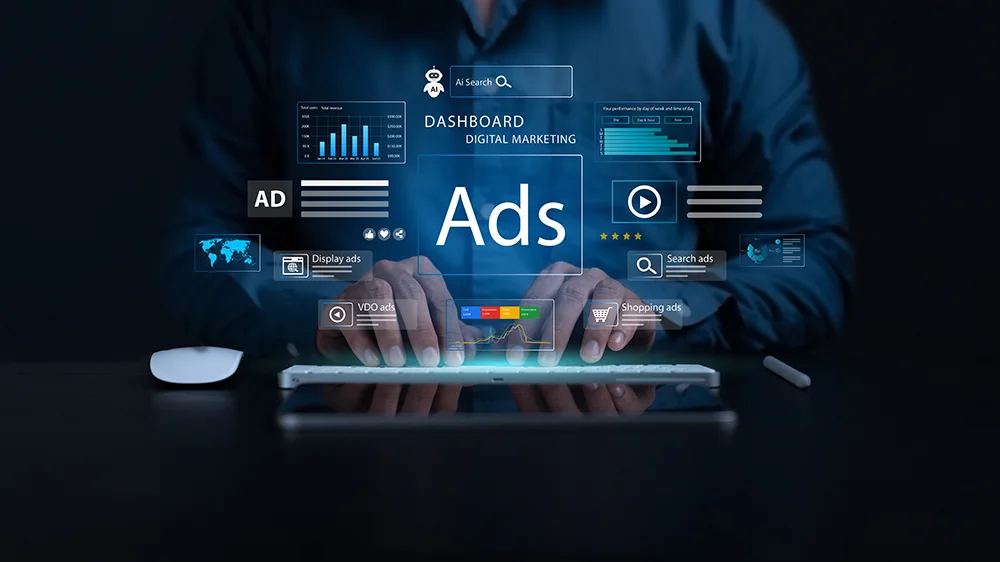
Google’s shift toward automation—epitomized by platforms like Performance Max (PMax) and the algorithms driving AI Overviews—has been transformative. These systems are incredibly powerful, but they operate as black boxes: you input data, and they output results. The quality of the input is directly proportional to the quality of the output.
In the age of AI, first-party data is the only reliable signal you can give to Google’s automated systems to ensure they target the right audience and optimize toward profitable conversions.
How to Use First-Party Data for PMax (Performance Max) Success
Performance Max (PMax) is Google’s powerful automation tool, engineered to find your most valuable customers across all their channels (Search, Display, YouTube, Gmail, Maps). The system’s core mechanism for audience understanding and targeting is the Audience Signal.
Crucially, the single most powerful and reliable Audience Signal you can provide is a Customer Match list, built directly from your first-party data.
A well-segmented Customer Match list acts as the ultimate blueprint for PMax, effectively telling Google: “Find more people who look exactly like my best, highest-value customers.” This direct instruction bypasses unreliable third-party data and immediately focuses PMax on audiences most likely to convert profitably.
How to use Customer Match in PMax:
- High-Value Lookalikes: You upload a list of customer emails (ideally segmented by value, e.g., “Top 10% Lifetime Value”). Google hashes the data for privacy and uses its vast signals to create lookalike models. This means your PMax campaigns start running with hyper-relevant audiences from Day 1, dramatically cutting down on the learning phase and wasted impressions.
- Exclusions: Just as important as finding new customers is avoiding the wrong ones. You can use your first-party data to create exclusion lists (e.g., current customers you don’t want to target with a “new customer only” promotion).
- Enhanced Bidding: Your first-party conversion data, tracked reliably via server-side methods (see section 3), is what fuels Google’s Smart Bidding. When the system knows exactly who converted and what their value was, it can bid intelligently to maximize your return on ad spend (ROAS).
First-Party Data Strategy and The SEO/E-E-A-T Connection
While not a direct ranking factor in the same way, building a direct relationship with your audience via first-party data is a powerful, off-page signal of trust and authority that aligns perfectly with Google’s E-E-A-T framework.
- Experience, Expertise, Authoritativeness, and Trust (E-E-A-T): Google’s quality rater guidelines are fundamentally about rewarding real, reliable brands. A thriving, engaged email list or a popular member community (built on first-party data) is powerful evidence that a brand is generating value and has a loyal following.
- Brand Authority: When thousands of users opt in to hear from you, it signifies your brand is a trusted source. This authority helps you weather algorithmic updates and can increase the likelihood of your content appearing in the coveted AI Overviews.
A successful first-party data strategy, therefore, acts as a high-octane blend for all your marketing efforts—not just paid media. For more on how E-E-A-T impacts your SEO, consider reading this official guidance from a reliable SEO source: What is E-E-A-T?
The Tracking Imperative: Server-Side Tagging for Marketing
First-party data is the key to reliable conversion tracking via server-side tagging, which is essential when browser-based, client-side cookies fail.
When you implement server-side tracking, the data transmission moves from the user’s browser (which is now blocking third-party cookies) to your own secure server. This ensures that every conversion, every lead, and every valuable action is accurately captured, attributed, and fed back into Google Ads and Google Analytics 4 (GA4). Without this, your AI campaigns are working with partial, poor-quality data.
3. The 4-Step Playbook for Building Your First-Party Data Strategy

For businesses starting their cookieless transition, the prospect can feel daunting. Here is a clear, actionable framework to build a robust first-party data strategy foundation.
Step 1: Audit & Centralize Your Data
Most businesses have data scattered everywhere. The first step is to bring it all together.
- Audit: Where is your data now? (A spreadsheet? Mailchimp? An old legacy system? A website database?)
- Centralize: Select a single source of truth—typically a modern, flexible CRM (Customer Relationship Management) system. All customer and lead data must flow into this central hub.
- Clean: Scrub your lists. Remove old, unengaged, or duplicate contacts. Clean data is powerful data.
Step 2: Collect with Intent & Consent
Implement robust, transparent collection points throughout your customer journey.
- Lead Magnet: Create high-value content (guides, templates, checklists, free mini-courses) that requires an email opt-in. This immediately segments users by their intent.
- Pop-Up/Banner: Ensure your cookie consent banner is compliant and offers a clear, simple choice.
- Subscription Gate: Offer “members-only” or “subscriber-only” content to drive direct registration.
- Clear Consent: Always include clear, explicit consent check-boxes on forms, explaining exactly how the data will be used (e.g., “I agree to receive marketing communications and understand my data will be used for ad personalization.”). You can find excellent resources on consent best practices from organizations focused on data privacy.
Step 3: Implement Server-Side Tracking
This is the non-negotiable technical key to reliable data. While this may sound complex, partnering with an expert makes it straightforward.
- Move to Server-Side GTM (Google Tag Manager): Migrate your tracking tags from the client-side (the user’s browser) to a server-side environment using GTM.
- Activate Enhanced Conversions: This feature sends hashed, first-party customer data (like an email address) securely to Google at the moment of conversion. This closes the measurement gap that third-party cookie restrictions created, leading to much higher conversion accuracy.
- Integrate GA4: Ensure all your conversion and behavioral data is accurately flowing into Google Analytics 4, which is built for the cookieless future and is the reporting backbone for PMax.
Step 4: Segment & Activate for AI

Don’t just have one giant list of emails. The value of your first-party data comes from how you slice it. Create smart, high-impact segments and use them to power your AI campaigns.
| Segment Example | Criteria (First-Party Data) | Activation (PMax Audience Signal) |
| High-Value Repeaters | 3+ Purchases, CLV > $1,000 | Use as a seed list: “Find more people like this for PMax.” |
| Cart Abandoners (Last 30 Days) | Added product to cart but didn’t convert | Use for aggressive remarketing/exclusion from generic campaigns. |
| Downloaded ‘Guide to X’ | Signed up for a specific lead magnet | Use for highly specific PMax creative messaging related to ‘X’. |
| One-Time Buyers | Made exactly 1 purchase, no activity in 6 months | Use for a win-back PMax campaign with a loyalty offer. |
By moving beyond basic segmentation, you transform your stored customer information into active, profit-driving PMax audience signals. This strategy is what ensures your marketing budget is invested intelligently. The future of targeted advertising is less about who you can track and more about who you know and how well you can model them. A great resource for modeling audiences is Google’s own documentation on the process: Google Ads Help: About Customer Match.
Your Data-Driven Advantage
The age of the third-party cookie is over, marking the end of “lazy marketing” and passive data collection. The new digital landscape is defined by active audience relationship management. The winners in the era of AI—from PMax to AI Overviews—will be the businesses that own their customer relationships and build the robust, technical infrastructure to leverage that data effectively.
By prioritizing a meticulous first-party data strategy, you achieve a truly defensible competitive advantage. This is where Gravitate One steps in: Building this foundation is complex, requiring a blend of technical expertise in web development, tag management, and advanced campaign strategy. A single misstep can lead to inaccurate reporting and wasted ad spend.

At Gravitate One, we don’t just run ads; we build the entire profit-driving data engine:
- Full-Stack Audit: We assess your current data fragmentation, CRM health, and existing tracking setup to identify critical gaps.
- Server-Side Tracking: We implement compliant server-side GTM and GA4 tracking, moving your conversion capture off the unreliable browser and onto your secure server.
- Enhanced Conversions: We connect your CRM directly to ad platforms, activating Enhanced Conversions to feed the highest quality, hashed customer data to your bidding AI.
- Audience Activation: We create and integrate powerful, segmented Customer Match lists to serve as the most effective Audience Signals for your PMax and Search campaigns.
This complete process ensures your ad spend isn’t wasted, your AI campaigns are “fed” the best possible data, and your business is future-proofed against platform changes.
Is Your First-Party Data Strategy Ready?
If you are running Google Ads or PMax without a robust first-party data strategy and server-side tracking, you are operating with inaccurate data, wasting budget, and falling behind.
Contact Gravitate One today for a free Data and Tracking Audit. We will show you exactly where your data gaps are and provide a clear roadmap to transform your data into a profit-driving engine.