
- Part 1 for Improving Conversion Rate Optimization: The Technical Foundation—The Three-Second Rule
- Part 2 for Conversion Rate Optimization: Psychological Scaffolding—Building Trust with Message Match
- Part 3 for Conversion Rate Optimization: Eliminating Friction—The Path of Least Resistance
- Part 4: CRO Strategies for Local Businesses (The Utah Context)
- Part 5 for CRO: The Silent Killers—Identifying Hidden Conversion Leaks
- Part 6 for Optimizing Conversion Rate: The Gravitate One Advantage—Revenue-First Marketing
- Conclusion: Stop Leaking Revenue and Start Scaling
You’ve spent thousands of dollars perfecting your PMax campaigns and fine-tuning your AI search strategy. Your dashboard shows the clicks are pouring in from across the Salt Lake Valley and beyond. But when you look at your actual sales revenue, the needle isn’t moving. Your website has a leaky bucket problem. In the competitive digital landscape of 2026, simply getting eyes on your page is only half the battle. If those eyes don’t turn into actions, your marketing budget is essentially a donation to big tech platforms. This is where Conversion Rate Optimization (CRO) becomes the most critical lever in your growth strategy.
In an era where attention spans are measured in milliseconds and users are increasingly skeptical of generic, AI-generated fluff content, a standard “About Us” page no longer converts. Most businesses focus 90% of their energy on getting traffic and only 10% on what happens after the click. This imbalance is the primary reason for high customer acquisition costs (CAC). By focusing on technical speed, psychological triggers, and frictionless user pathways, you can transform your website from a passive brochure into an active sales machine. This guide will explore how to increase website conversion rate metrics effectively, lowering your CAC without spending a dime more on ads.
Part 1 for Improving Conversion Rate Optimization: The Technical Foundation—The Three-Second Rule

In 2026, Core Web Vitals are no longer just an SEO ranking factor; they are a fundamental conversion requirement. If your landing page takes more than three seconds to become interactive, 40% of your paid traffic—the traffic you just paid premium rates for—will bounce before they even see your offer. This is the first hurdle in solving the riddle of “why is my Google Ads traffic not converting?”
The Anatomy of Speed in 2026
Speed isn’t just about how fast a page loads in a vacuum; it’s about perceived performance. Users in South Jordan and beyond are browsing on high-speed 5G, but their cognitive patience has reached an all-time low. If the visual stability of your page is poor—meaning elements jump around as the page loads—users will subconsciously flag your site as untrustworthy.
Prioritize Largest Contentful Paint (LCP)
The LCP measures how long it takes for the largest element on the screen (usually a hero image or a primary H1 headline) to become visible. To optimize this:
- Compress High-Res Assets: Use next-gen formats like AVIF or WebP.
- Prioritize the Hero: Ensure your value proposition is hard-coded to load before heavy JavaScript elements.
- Use CDNs: Ensure your content is served from a server physically close to your user, whether they are in Utah or London.
Server-Side Optimization and First-Party Data

As privacy regulations tighten and third-party cookies vanish, Conversion Rate Optimization (CRO) has shifted toward server-side tracking. By moving tracking scripts from the user’s browser to the server, you reduce the weight of the page. This results in a lightning-fast User Experience (UX) and ensures that your data collection doesn’t come at the cost of your site speed.
Furthermore, server-side tagging allows you to clean and enrich your data before it reaches your marketing platforms. This means your AI-driven bidding strategies get higher-quality signals, leading to a more efficient feedback loop between your landing page and your ad spend.
Mobile-First Interaction: The Thumb Zone
With over 80% of ad traffic originating from mobile devices, a thumb-friendly design is mandatory. If a user has to zoom in to read your font or struggles to click a tiny “Submit” button, they will leave. Mobile-first design isn’t just about shrinking a desktop site; it’s about rethinking the hierarchy of information for a vertical, touch-based interface.
One often-overlooked aspect of mobile landing page optimization 2026 is the sticky call to action. As a user scrolls through your benefits, a button should remain accessible at the bottom of the screen, allowing them to convert the moment they are convinced, rather than forcing them to hunt for a contact form at the top or bottom of the page.
Part 2 for Conversion Rate Optimization: Psychological Scaffolding—Building Trust with Message Match

One of the biggest conversion killers is Message Mismatch—the jarring feeling a user gets when an ad promises a specific solution, but the landing page feels like a generic corporate homepage. To increase website conversion rate optimization (CRO) results, you must maintain the scent of the click from the initial impression all the way to the thank-you page.
The Above-the-Fold Promise
Your H1 headline on the landing page should be a near-mirror reflection of the headline in your top-performing ad. If your ad mentions “Custom SEO for Law Firms,” your landing page should not say “We Provide Comprehensive Digital Marketing.” It should say “Custom SEO Strategies Tailored for Modern Law Firms.” This immediate validation tells the user they are in the right place within the first 500 milliseconds.
Dynamic Text Replacement (DTR) and Personalization
Modern landing page optimization strategies involve personalization at scale. DTR allows you to dynamically change landing page keywords based on the user’s specific search query. For example, if a user searches for “Best Digital Marketing Agency in South Jordan,” DTR can swap your headline to include “South Jordan” specifically. This level of hyper-relevance significantly lowers the barrier to entry, as the user feels your service was built specifically for their local needs.
Social Proof 2.0: Moving Beyond Generic Quotes
The days of static, text-based quotes from “John D.” are over. Users in 2026 are savvy; they know these can be fabricated. To build real trust, you need:
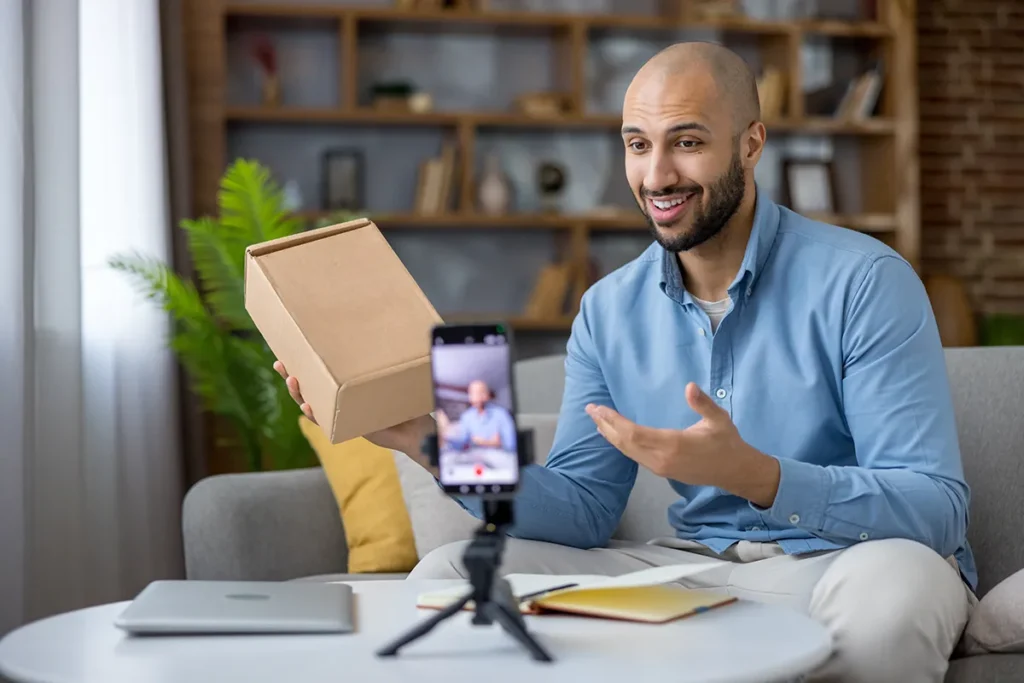
- Video Testimonials: Real humans talking about real results. Video creates an emotional connection that text cannot match.
- Real-Time Social Proof: Use tools like Trustpulse to show notifications such as “5 businesses in Salt Lake City just downloaded our guide.”
- Third-Party Validation: Highlighting live ratings from Trustpilot or Google Business Profiles directly on the page.
- The Authority Section: Displaying logos of well-known local or national brands you’ve worked with.
The Psychology of Visual Cues
Where is the person in your hero image looking? Studies in User Experience (UX) show that users follow the gaze of the people in images. If your hero image features a professional looking toward your contact form, your conversion rate is likely to increase. These subtle psychological nudges, or directional cues, guide the user’s eye to the most important part of the page without them even realizing it.
Part 3 for Conversion Rate Optimization: Eliminating Friction—The Path of Least Resistance
Friction is anything that makes a user pause, think too hard, or doubt their decision. In digital marketing, every extra field in a form and every unnecessary click is an exit ramp. To master how to reduce landing page bounce rate, you must become a minimalist.
The Single-Purpose Landing Page

A common mistake is sending paid traffic to a homepage. Homepages are choose-your-own-adventure” books; they have too many options. For specific campaigns, use a dedicated landing page with one goal and one clear Call to Action (CTA). By removing the navigation menu, you keep the user focused on the conversion event. This is among the best landing page practices for PMax (Performance Max) campaigns, where Google’s AI is looking for high-intent signals to optimize its bidding.
Multi-Step Forms: The Progressive Disclosure Secret
Long forms are intimidating and are a primary reason for high bounce rates. However, data shows that multi-step forms—which break the process into smaller, digestible questions—often convert 30% better than single-page forms.
- The Sunk Cost Fallacy: Once a user answers two easy questions (like “What is your industry?”), they are more likely to finish the form to complete the task they started.
- Type-Ahead Address Lookups: Use Google Maps API to autocomplete addresses, reducing typing effort.
- Progress Bars: Show the user they are almost there to encourage completion.
Frictionless Checkout and Modern Payments Boost Conversion Rate Optimization
For e-commerce and lead-gen sites, the checkout or submission process is the ultimate friction point. Integrating Apple Pay or PayPal can remove the need for manual credit card entry, which is the #1 cause of cart abandonment on mobile. In 2026, if you aren’t offering one-click submission or payment, you are losing money to a competitor who is.
AI Chatbots vs. Concierge Services
In 2026, users expect instant gratification. Implementing an intelligent, low-friction AI chatbot can address FAQs in real-time. If a user is wondering, “Do you offer month-to-month contracts?” and can’t find the answer in 5 seconds, they leave. A bot answers that instantly, keeping the user in the funnel. These bots can also qualify leads by asking preliminary questions before passing them to your sales team.
Part 4: CRO Strategies for Local Businesses (The Utah Context)
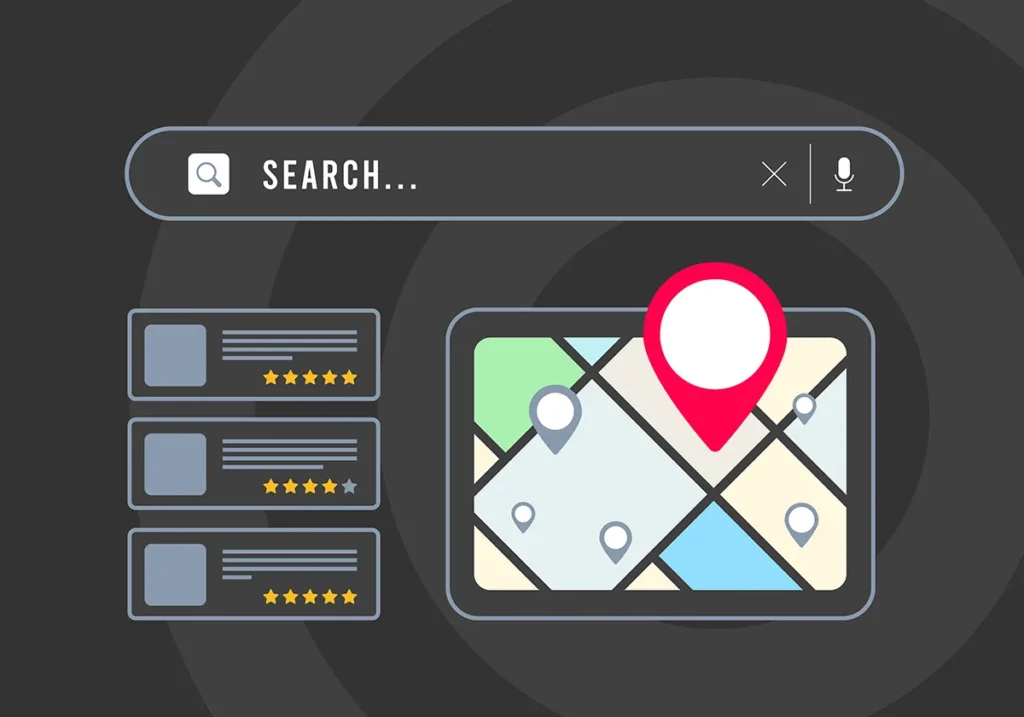
If you are a business operating in a specific geographic area, like the Silicon Slopes or Salt Lake County, your CRO strategies for local businesses need to be even more targeted. Local users are looking for proximity, local expertise, and a sense of community.
Hyper-Local Social Proof
Include maps of recent projects or client locations (with privacy in mind). Seeing that a neighbor in Daybreak or a fellow business owner in Sandy used your services is a powerful psychological trigger that global competitors cannot replicate. Mentioning local landmarks or specific Utah-based challenges (like seasonal marketing shifts) shows you aren’t just another faceless agency.
Local Intent and Long-Tail Keywords
While broad terms bring traffic, Long-Tail Keywords often bring the highest conversions. People searching for “Digital Marketing Agency South Jordan UT” are much closer to a buying decision than someone searching for marketing tips. Your landing pages should be optimized to catch this high-intent traffic by featuring localized copy and specific Utah case studies.
Google Business Profile Integration
Your CRO doesn’t start on your website; it starts on the search results page. Ensuring your Google Business Profile is synced with your landing page—meaning the reviews and photos match—creates a seamless transition. If a user sees a 5-star rating on Google and then sees those same reviews highlighted on your landing page, the trust bridge is built.
Part 5 for CRO: The Silent Killers—Identifying Hidden Conversion Leaks

Sometimes, your page looks great, the message matches, and the speed is decent, yet conversions are still low. This is usually due to Silent Killers—issues that aren’t obvious until you look at the data.
Accessibility as a Conversion Tool
If your site isn’t accessible to users with visual or motor impairments, you are excluding a significant portion of the market. Beyond compliance, accessible design (high contrast, clear fonts, keyboard navigation) actually improves the experience for everyone. A site that is easy to navigate is a site that is easy to buy from.
Clarity Over Creativity
Often, web designers get too clever with navigation or button labels. Instead of “Get Started,” they use “Embark on Your Journey.” While poetic, it adds cognitive load. Users have to think, “Does embark mean sign up or just read more?” Use clear, action-oriented language. “Get a Free Quote” beats “Contact Us” because it tells the user exactly what they get in return for their click.
Addressing Objections Pre-emptively
Every customer has a “But…” in their mind.
- “But is it expensive?”
- “But will it take a long time?”
- “But is it difficult to set up?” The best landing pages address these objections before the user even has to ask. An FAQ section or a “How it Works” 1-2-3 step graphic can neutralize these doubts immediately, clearing the path to the CTA.
Part 6 for Optimizing Conversion Rate: The Gravitate One Advantage—Revenue-First Marketing

Many agencies focus solely on the Buy side of ads—how many clicks they can get you for your budget. At Gravitate One, we focus on the Revenue side. We believe that traffic is just a commodity; conversions are the real asset.
Our Data-Driven Process: No Guessing Allowed
We don’t just change button colors and hope for the best. Our CRO process is rooted in scientific observation:
- Heat Mapping: Using tools like Hotjar to see exactly where users are clicking, scrolling, and—more importantly—where they are dropping off. If 80% of users never scroll past the first section, we know your most important info needs to move up.
- A/B Testing: We test everything from headline variations to CTA placements. By running two versions of a page simultaneously, we let the data tell us which one produces more revenue.
- Session Recording: We watch real user behavior to identify technical bugs or confusing layouts. This fly-on-the-wall perspective reveals why people get frustrated and leave.
- Full-Funnel Analysis: We look at the data from the first impression in a Google Ads campaign to the final conversion. This ensures that the high-intent traffic we drive is actually landing on a page that can close the deal.
A Defensible Growth Strategy
In a world where ad costs are constantly rising due to increased competition and AI-driven bidding wars, relying solely on more traffic is a losing game. Improving your conversion rate provides a defensible growth strategy. If you double your conversion rate, you effectively double your marketing budget’s impact without spending an extra cent on media. This makes your business more resilient and your ROI more predictable.
Beyond the Click: Post-Conversion Optimization
CRO doesn’t end at the “Thank You” page. What happens next? Does the user get a confirmation email? Are they directed to a “Next Steps” video? We help you optimize the entire customer journey to ensure that the lead you just paid for actually turns into a long-term client.
Conclusion: Stop Leaking Revenue and Start Scaling

The Conversion Gap is the space between the potential of your traffic and the reality of your revenue. In 2026, bridging that gap requires a blend of technical excellence, psychological mastery, and a relentless focus on the user experience. You can continue to pour money into the top of a leaky funnel, or you can take the time to patch the holes and build a system that works.
Traffic is a commodity, but a highly optimized website is a competitive advantage that stays with your business forever. Remember, a mere 1% increase in your Conversion Rate Optimization (CRO) results can often lead to a 20-50% increase in total profit. By optimizing for speed, maintaining message match, and ruthlessly eliminating friction, you stop losing the customers you’ve already paid to find.
Is your website leaking revenue? Don’t let your hard-earned traffic go to waste. A stagnant website is a liability in today’s fast-paced market. Contact Gravitate One today for a comprehensive Landing Page & CRO Audit. Located in the heart of South Jordan, UT, we help businesses across the country transform their traffic into transactions. Let’s look at your data, find the friction, and turn your website into the sales machine it was meant to be.